Advancements in water damage restoration techniques and technologies have revolutionized the industry, providing professionals with innovative tools to efficiently and effectively restore water-damaged areas. These cutting-edge innovations, such as advanced drying techniques and air quality improvement systems, have significantly improved the restoration process.
By utilizing thermal imaging and moisture meters, technicians can accurately identify and address areas affected by water damage, ensuring a precise and prompt drying process. Additionally, the introduction of air scrubbers and dehumidifiers equipped with HEPA filters has enhanced air quality and eliminated contaminants, further enhancing the restoration process.
Incorporating these state-of-the-art techniques and technologies allows professionals to mitigate the risk of further damage and mold growth, while promoting a thorough and efficient restoration of water-damaged areas.
One of the key components in the field of water damage restoration is the utilization of advanced drying techniques and tools, which play a crucial role in expediting the drying process and preventing further damage.
With the latest technology at their disposal, professionals in the industry are able to achieve efficient drying and ensure rapid response to water damage incidents. These cutting-edge techniques and tools are designed to detect and remove moisture effectively, minimizing the risk of secondary damage, such as mold growth.
One such technology is the use of thermal imaging cameras and moisture meters. These devices allow technicians to accurately assess the extent of water damage and identify hidden pockets of moisture within structures. By pinpointing these areas, they can focus their drying efforts, saving time and resources.
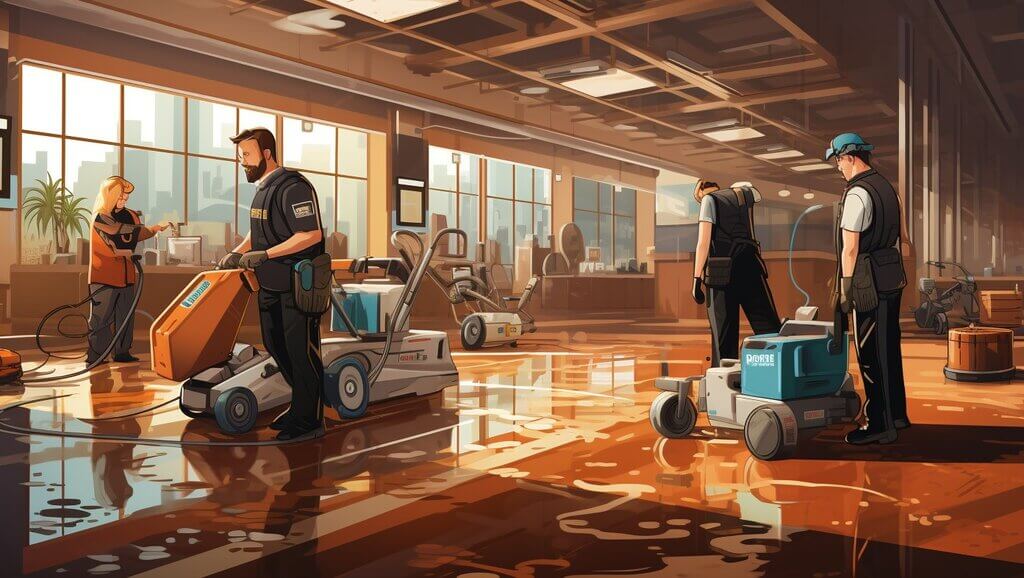
The integration of air scrubbers and dehumidifiers with HEPA filters helps to improve air quality by removing contaminants and reducing the moisture content in the environment.
The combination of these advanced drying techniques and tools enables professionals to provide a rapid and efficient response to water damage incidents. By utilizing cutting-edge technology and moisture detection methods, they can ensure thorough drying, preventing further damage and promoting a safe and healthy environment for occupants.
Advanced drying techniques and tools in water damage restoration have led to significant advancements in air quality improvement. By accurately assessing moisture levels and targeting problem areas, these techniques and tools allow for a more efficient and effective drying process.
Read more: How to Prevent and Mitigate Water Damage
One key innovation is the use of thermal imaging and infrared cameras, which enable restorers to identify hidden pockets of moisture that may not be visible to the naked eye. This advanced assessment technique guides restorers in addressing problem areas accurately, reducing the risk of further damage and mold growth.
Real-time monitoring is another important innovation that enhances air quality improvement. Integration of moisture-sensing technologies allows for continuous monitoring and adjustment, ensuring that the drying process is optimized and minimizing the risk of secondary damages. By closely monitoring moisture levels, restorers can adjust drying equipment and strategies as needed, preventing excessive drying or inadequate moisture removal.
These advancements in air quality improvement also contribute to a healthier living environment. As the drying process becomes more efficient, the time required for restoration is reduced, minimizing the disruption to occupants. Additionally, advanced drying systems utilizing heat, airflow, and dehumidification significantly improve air quality by removing excess moisture and reducing the risk of mold growth. This helps to create a clean and safe environment for occupants, promoting their well-being.
Utilizing smart sensors for early detection is a crucial aspect of implementing cutting-edge techniques and technologies in water damage restoration. These advanced sensors are designed to detect changes in temperature, humidity, and moisture levels, providing real-time data that allows for swift intervention.
Here are four key reasons why smart sensors and early detection are essential in the field of water damage restoration:
How does artificial intelligence play a role in water damage restoration?
Artificial intelligence (AI) is revolutionizing the field of water damage restoration by providing cutting-edge techniques and technologies that enhance the efficiency and effectiveness of the restoration process.
AI-driven data analysis allows for the prediction of potential risks and the optimization of restoration strategies. By analyzing real-time data from smart sensors that detect changes in temperature, humidity, and moisture levels, AI can quickly identify areas affected by water damage and provide swift intervention.
One of the key roles of AI in water damage restoration is its ability to enhance decision-making. AI algorithms can process large amounts of data and provide valuable insights to restoration professionals. This allows them to make informed decisions about the most effective techniques and technologies to use in each specific restoration project.
Read more: A Homeowner's Guide to Water Damage: Identification, Action, and Restoration
Furthermore, AI enables a proactive approach to water damage restoration. By continuously monitoring and analyzing data, AI can detect potential issues before they escalate, allowing for early intervention and minimizing the risk of further damage.
The use of IoT in real-time monitoring has revolutionized water damage restoration processes. With the integration of smart sensors and advanced technologies, property restoration companies now have access to real-time data that allows for swift intervention and early detection of water damage. Here are four ways in which IoT has made a significant impact on real-time monitoring in water damage restoration:
Thermal imaging and moisture meters improve the drying process in water damage restoration by providing more accurate and targeted drying of affected areas. These advanced techniques allow for efficient removal of moisture, minimizing the risk of further damage and mold growth.
Air scrubbers and dehumidifiers with HEPA filters are essential in improving air quality during water damage restoration. They help remove contaminants from the environment, ensuring a safer and healthier living or working space.
Smart sensors contribute to early detection of water damage by continuously monitoring moisture levels in key areas. When abnormal moisture levels are detected, alerts are sent to notify property owners or restoration professionals, allowing for prompt action to prevent further damage.
Artificial intelligence (AI) technology aids in water damage restoration processes by analyzing large amounts of data and providing real-time insights. This enables faster and more accurate identification of affected areas, prediction of potential issues, and optimization of drying and restoration methods for efficient and effective results.
The benefits of IoT in real-time monitoring of water damage situations are numerous. It allows for constant monitoring of moisture levels, temperature, and humidity, enabling quick detection of potential issues and prompt response to prevent further damage.